Waking up
How to Wake Up Without Waking Your Partner
The quietest dependable way to wake up without waking your partner is a vibration on your wrist, backed up a few minutes later by a soft, slowly rising sound in case you sleep through it. A dim light on your side of the bed helps. Earbuds and phones under pillows are less reliable than they look.
Key takeaways
- A vibration on the wrist is the quietest alarm, because only the wearer feels it.
- Silent alarms fail silently, so set a quiet, rising sound a few minutes later as a backup.
- Snoozing multiplies the disturbance; set the alarm for the time you will really get up.
- Getting ready in another room matters as much as the alarm itself.
What actually wakes the other person
It is rarely just the alarm. A typical early start contains three separate disturbances: the sound itself, every repeat of it when you snooze, and everything you do afterward, from the bright phone screen to the wardrobe door. A plan that silences the alarm but leaves the other two will still earn you a sigh from the far side of the bed.
There is also an awkward asymmetry. An alarm loud enough to wake a tired person from deep sleep is usually more than loud enough to wake a rested one who is sleeping lightly near morning. So the goal is a signal aimed at you alone, not a quieter version of the same broadcast.
Silent alarm options compared
No method is both perfectly silent and perfectly dependable, so most couples end up combining two.
| Method | How quiet for your partner | How reliable for you |
|---|---|---|
| Vibration on the wrist (smartwatch or fitness band) | Nearly silent | Good for most people; weaker for heavy sleepers or after short nights |
| Vibrating pad or phone under your pillow | Quiet, though it can travel through a shared mattress | Fair; it can shift during the night |
| Low-volume sound that rises gradually | Quiet at first; audible if you do not respond | Good, because it keeps getting louder |
| Dim light on your side | Silent; may bother a light-sensitive partner | Low on its own; a helper, not an alarm |
| Earbuds or sleep headphones | Silent | Uncertain; they fall out, run flat or may not carry the alarm |
| Ordinary alarm at full volume | Loud | High; this is your backup |
Does a vibrating alarm on your wrist work?
For most people, yes. A tap on the wrist reaches only the wearer, and it arrives through touch, so there is nothing for anyone else to hear. Most smartwatches and fitness bands can wake you this way.
It has three weak points. The watch needs enough charge to last the night, so top it up in the evening. It has to sit snugly, because a loose band turns a tap into a faint rattle. And if you are very short on sleep, you may simply not feel it. Check, too, what your phone does at the same moment: a silent wrist alarm achieves little if the phone on the nightstand rings out loud as well.
Setting it up on the wrist is covered in using WakeUp 2day on Apple Watch.
If you need sound, make it quiet and gradual
A sound that starts barely audible and rises slowly gives the person nearest to it, and half-expecting it, the first chance to respond. Keep the phone on your side of the bed with the speaker facing you, and stop the alarm as soon as you notice it. Choose something soft: in one small survey study, alarms that people rated as melodic were associated with less reported grogginess than harsh ones, although the results were self-reported and correlational.1 There is more on this in which alarm sounds work best.
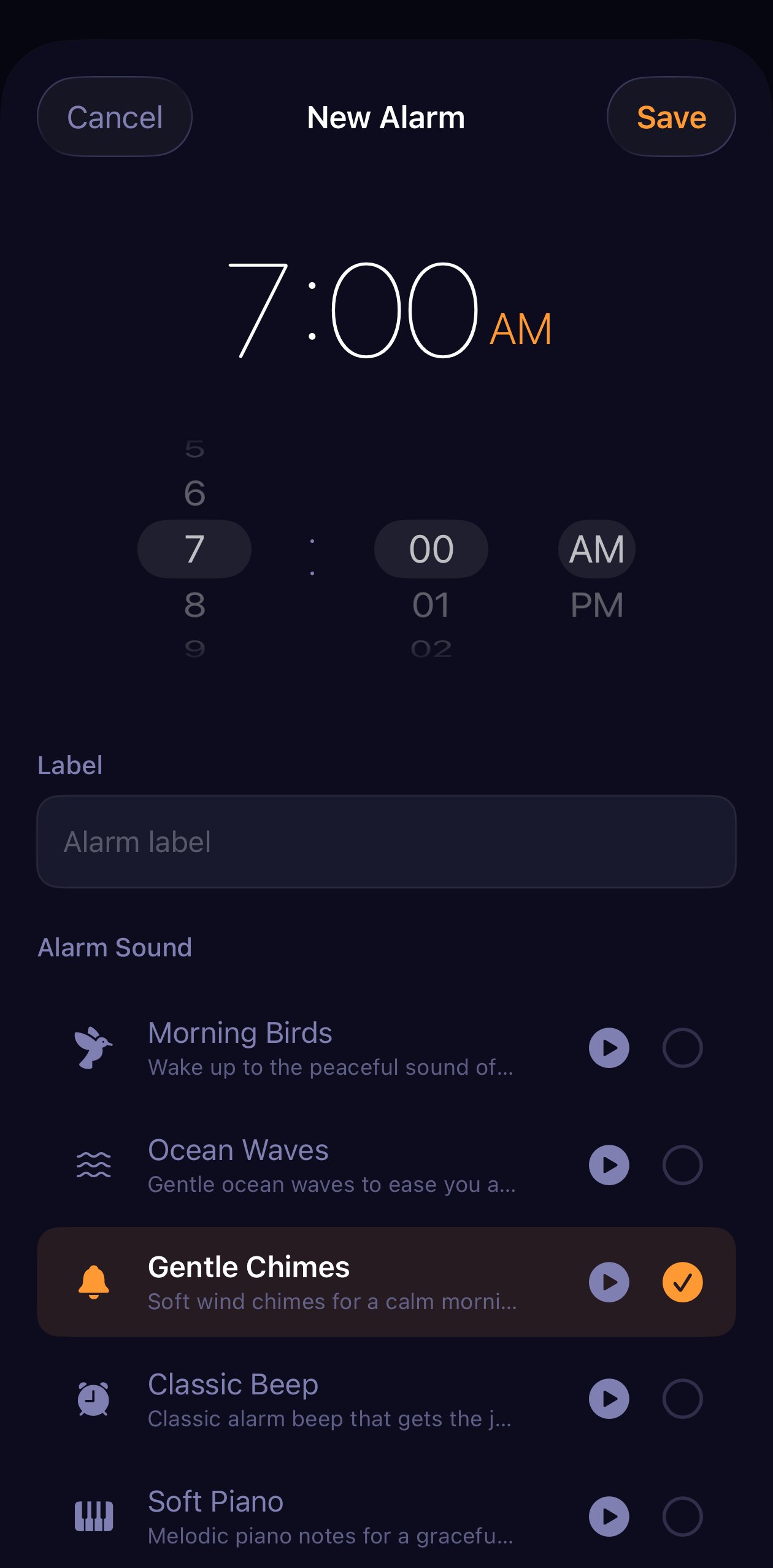
Then deal with the snooze button. Snoozing is common: in one study, 57% of participants were snoozers.2 In a shared bed, though, each repeat is another chance to wake the other person. Set the alarm for the time you truly intend to get up and turn snooze off, or read how to stop hitting snooze if that sounds impossible.
Use light on your side of the bed only
Light is among the candidate countermeasures for the grogginess that follows waking.3 It will not wake you reliably by itself, but a dim, warm lamp on your side makes the first minute easier and spares the room the ceiling light. Aim it away from your partner, keep it low and offer them an eye mask if they are sensitive.
A smart bulb in your own bedside lamp can come on when your alarm rings; turning smart lights into a sunrise alarm explains the options.
What about earbuds or sleep headphones?
They sound like the perfect answer, and sometimes they are. The caveats are practical: earbuds fall out when you turn over, batteries run flat before morning, and side sleepers often find them uncomfortable. Whether an alarm plays through headphones, the phone speaker or both also depends on your device and app, so test it instead of assuming.
They also dull sounds you may want to hear, such as a smoke alarm or a child. If you use them, keep the volume low and treat them as a first signal with a backup behind it.
Silent alarms fail silently, so keep a backup
The trade-off with every quiet method is that when it fails, nothing tells you. The fix is a second, audible alarm set a few minutes after the silent one, ideally out of reach so you have to get up. On a good morning you wake to the first signal and cancel the backup before it sounds. On a bad one your partner is woken briefly, which most people will accept over you missing work.
If the backup ends up ringing most days, a silent alarm is not enough for you at the moment, and alarm strategies for heavy sleepers will serve you better. If you sleep enough and still need a blaring alarm, or your partner notices loud snoring with pauses in your breathing, mention it to a doctor.
Different schedules and shift work: bedroom etiquette
The alarm is only the first moment of your morning. What follows matters as much:
- Lay out clothes, bag and anything noisy in another room the night before.
- Leave the bedroom promptly and do your waking up elsewhere: light, coffee, phone.
- Let the earlier riser sleep nearest the door.
- Agree on the rules together, such as one alarm and no snooze, so nobody lies awake resenting them.
- Give the later sleeper their own defenses: earplugs, an eye mask or steady background sound, which some people find masks small noises (see white, brown and pink noise compared).
Shift work makes all of this harder, because the wake time moves and one of you may be sleeping in daylight. A wrist alarm that travels with your schedule helps, as do blackout curtains and a household agreement about daytime quiet. On the toughest rotations, some couples sleep in separate rooms on work nights. That is a practical arrangement, not a verdict on the relationship.
A setup to try this week
- Set a wrist vibration for your real wake time.
- Add a quiet, slowly rising sound a few minutes later on your side of the bed.
- Put a dim lamp within reach and your clothes in another room.
- Turn snooze off.
- Test the whole thing on a morning that does not matter, then ask your partner what they heard.
Their answer is the only measure that counts, so adjust from there.
Frequently asked questions
What is the best silent alarm for couples?
For most people it is a vibrating alarm on a smartwatch or fitness band, because only the wearer feels it. Pair it with a quiet, gradually rising sound a few minutes later as a backup, since a vibration can be slept through and a watch can run out of battery during the night.
Can I set an alarm that only I can hear?
A wrist vibration is the closest thing. Earbuds or sleep headphones can also work, but they may fall out, run out of battery or not carry the alarm sound at all, depending on your device and app. Test any setup during the day and keep an audible backup for mornings that matter.
Will a vibrating alarm wake up a heavy sleeper?
Not dependably. Vibration works well for many light and average sleepers but is easy to sleep through after short nights. Heavy sleepers usually need sound as well. A fair compromise in a shared bedroom is vibration first, then a sound that starts very quietly and rises until you respond.
How do couples with different work schedules share a bedroom?
Agree on a routine. The earlier riser uses a silent or very quiet alarm, skips snooze, sleeps nearest the door and gets ready in another room with everything laid out the night before. The later sleeper can use earplugs or an eye mask. On the hardest shift rotations, some couples sleep apart on work nights.
Sources
- McFarlane SJ, Garcia JE, Verhagen DS, Dyer AG. Alarm tones, music and their elements: analysis of reported waking sounds to counteract sleep inertia. PLOS ONE, 2020. doi.org/10.1371/journal.pone.0215788
- Mattingly SM, Martinez G, Young J, Cain MK, Striegel A. Snoozing: an examination of a common method of waking. Sleep, 2022. doi.org/10.1093/sleep/zsac184
- Hilditch CJ, McHill AW. Sleep inertia: current insights. Nature and Science of Sleep, 2019. doi.org/10.2147/NSS.S188911
This article is for general information only and is not medical advice. WakeUp 2day is not a medical device and does not diagnose, treat or prevent any condition. If you are worried about your sleep or your health, talk to a doctor.