Sleep science
Why Do I Snore? Causes, Fixes and How to Track It
You snore when the muscles in your throat relax during sleep, your airway narrows, and soft tissue vibrates as air squeezes past it. Sleeping on your back, alcohol, a blocked nose and extra weight all make it more likely. Simple changes help many people, but loud snoring with pauses in breathing needs a doctor.
Key takeaways
- Snoring is relaxed throat tissue vibrating as air squeezes through a narrowed airway.
- Back sleeping, evening alcohol, a blocked nose and extra weight are common contributors.
- Test one change at a time and compare a week of recorded nights before and after.
- Loud snoring with pauses, gasping or daytime sleepiness can signal sleep apnea and needs a doctor.
What actually makes the snoring sound?
While you are awake, muscles in your throat hold the airway open. As you fall asleep they relax, and the soft palate, the uvula, the tongue and the walls of the throat sag inward. Air moving through the narrower passage speeds up and sets those soft tissues fluttering, much like a flag in the wind. The narrower the gap, the louder the noise tends to be.
The narrowing can happen in different places, from the nose to the back of the tongue, and the weak spot varies between people. That is one reason a remedy that silences one snorer does nothing for another.
Snoring also sits on a spectrum. In ordinary snoring the airway is partly narrowed but air keeps flowing. In obstructive sleep apnea it narrows so far that breathing repeatedly becomes very shallow or stops for a while, until the brain briefly rouses you to reopen it, often with a snort or a gasp.
Why do some people snore and others don’t?
Most snoring has more than one contributor. These are the common ones, roughly in order from easiest to hardest to change:
| Contributor | Why it matters | What to try |
|---|---|---|
| Sleeping on your back | Gravity lets the tongue and soft palate fall back toward the throat | Sleep on your side |
| Alcohol in the evening | Relaxes the throat muscles even further | Leave a few alcohol-free hours before bed |
| A blocked nose | Colds and allergies make you pull air harder or breathe through your mouth | Treat the congestion; ask a pharmacist what suits you |
| Sedating medicines | Some sleeping pills and other sedatives relax the airway | Ask your doctor, and do not stop a prescribed medicine on your own |
| Smoking | Irritates and swells the lining of the nose and throat | Quitting helps on many fronts |
| Extra weight, especially around the neck | Adds soft tissue that narrows the airway | Losing weight reduces snoring for some people |
| Anatomy | Large tonsils, a long soft palate, a bent nasal septum or a small jaw narrow the airway | A doctor can examine your nose and throat |
Age and hormones play a part too. Muscle tone in the throat tends to decline with age, and snoring often becomes more common during pregnancy. If snoring starts or gets much louder while you are pregnant, mention it at your next checkup.
How to stop snoring: what is worth trying first
Unless you have any of the warning signs described below, start with the changes that cost nothing, and give each one about a week before deciding whether it worked.
- Sleep on your side. A body pillow, or a firm pillow wedged behind your back, makes rolling over less likely. Some people sew a tennis ball into the back of a sleep shirt, which is crude but makes lying on your back uncomfortable.
- Raise the head of the bed. A slight lift under the head end of the bed, or a wedge pillow, helps some back sleepers. Stacking ordinary pillows tends to bend your neck instead.
- Move alcohol earlier. If you drink, finish well before bedtime and compare nights with and without it.
- Clear your nose. Treat allergies, try a saline rinse or nasal strips, and keep decongestant sprays for short-term use, since overusing them can make congestion worse.
- Work on the bigger levers. Losing excess weight and stopping smoking take longer but address common causes directly.
Anti-snoring mouthpieces, which hold the lower jaw slightly forward, help some people and are best fitted by a dentist. Before you buy any device, though, ask a doctor whether your snoring could be a sign of sleep apnea. Quieting the noise can hide the warning sign without fixing the problem underneath.
When is snoring a sign of something more serious?
Ordinary snoring can be a nuisance without being a health problem. Loud snoring, pauses in breathing, gasping and daytime sleepiness, however, are recognized symptoms of sleep apnea, which is diagnosed with a sleep study.1 See a doctor if any of these apply to you:
- Someone has seen you stop breathing, or heard you choke or gasp, in your sleep.
- You snore loudly most nights, loud enough to be heard through a closed door.
- You wake up gasping, or often wake with a dry mouth or a headache.
- You feel sleepy during the day despite enough time in bed, or doze off whenever you sit still.
- You snore and also have high blood pressure.
- Your child snores regularly, breathes through the mouth or sleeps very restlessly.
This is not a rare problem. One analysis estimated that about 936 million adults aged 30 to 69 worldwide have obstructive sleep apnea, around 425 million of them with moderate to severe disease.2 It is treatable, and the first step is a conversation with your doctor. For the full set of symptoms and how diagnosis works, see the warning signs of sleep apnea.
How can recording your nights help?
You cannot hear yourself snore, and a partner’s report depends on whether they happened to be awake. A recording turns guesswork into evidence and lets you test changes properly:
- Record a baseline. Track about a week of ordinary nights before changing anything.
- Change one thing. Side sleeping, no evening alcohol or nasal strips, but not all three at once, or you will not know which one helped.
- Compare weeks, not nights. Snoring varies from night to night, so look at the average over a week.
- Listen, don’t just count. Play back a few clips to check that the sound is you and not a partner, a pet or a fan.
- Note the context. A cold, a late drink or a different bed can explain an odd night.
Snoring is one of the more useful things a phone can measure, because a microphone hears it directly; just remember that a phone cannot always tell whose snoring it is. For the bigger picture, see what sleep trackers measure well and where they guess. Put the phone close to the bed with the microphone uncovered; the guide to tracking sleep with just an iPhone covers the setup.
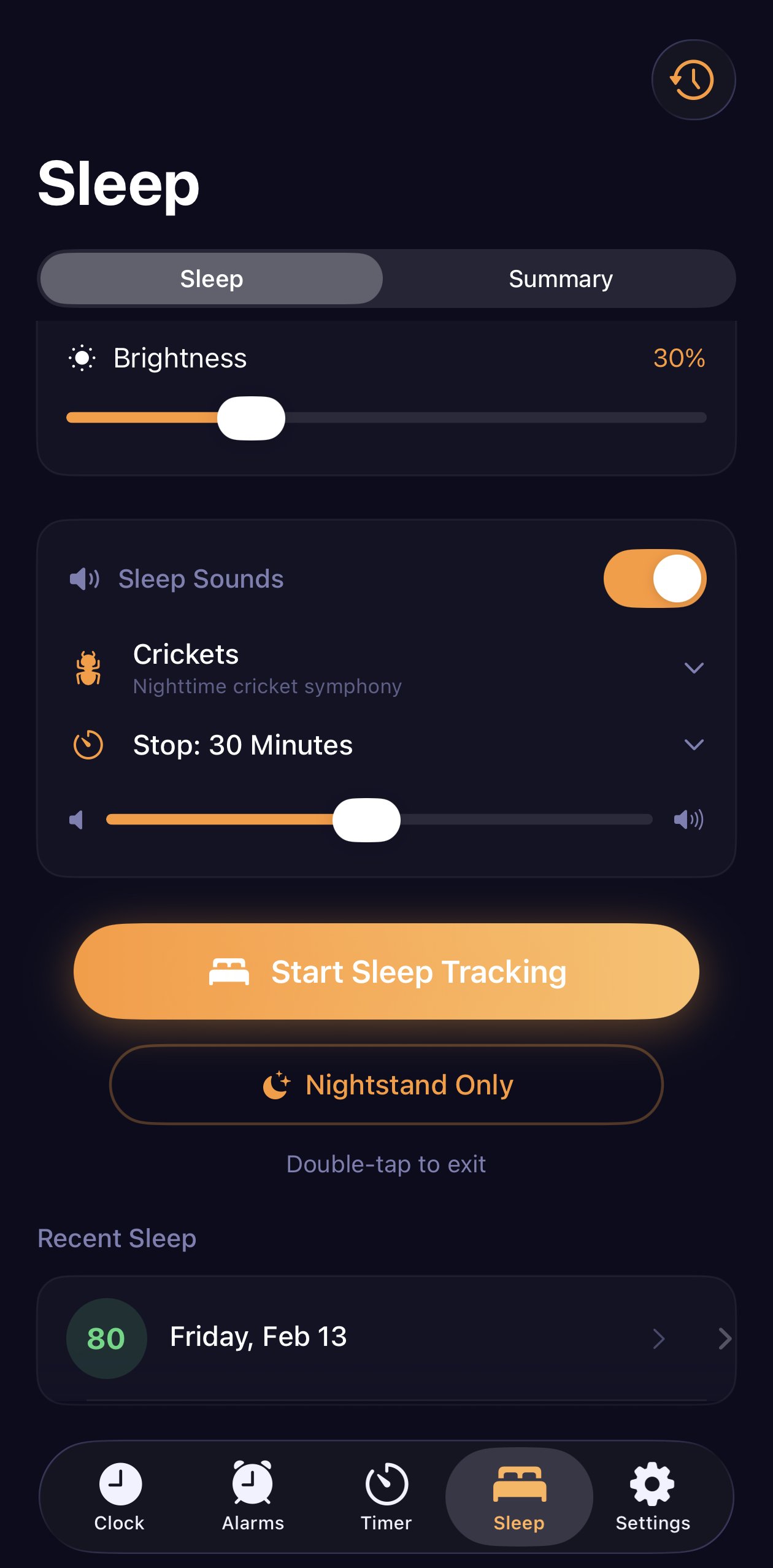
Bedroom audio is personal, so check where any app analyzes and keeps your recordings. There is more on that in what happens to your sleep data.
What if your partner is the one who snores?
Sharing a bed with a snorer is a sleep problem in its own right. Earplugs and steady masking sound help some people; here is how white, pink and brown noise compare. Going to bed first, so you are asleep before the snoring starts, works for some couples, and sleeping in separate rooms on bad nights is a practical choice, not a verdict on the relationship.
Above all, tell your partner what you hear. You are the person most likely to notice pauses or gasping, and your description, or a short recording, is exactly what a doctor will want to know about.
Where to start tonight
Record tonight as a baseline and keep going for a week. Then pick the easiest change for you, usually side sleeping or skipping the late drink, and run it for another week before comparing the two.
If you already recognize any of the warning signs above, skip the experiments and book an appointment first. Snoring that is just noise can be worked on at home; snoring that comes with pauses, gasping or daytime sleepiness belongs with a doctor.
Frequently asked questions
Is snoring bad for your health?
Occasional, soft snoring is common and usually harmless, though it can disturb your partner and break up your own sleep. Loud, habitual snoring is different, because it can be a sign of obstructive sleep apnea, a condition worth diagnosing and treating. If your snoring comes with pauses in breathing, gasping or heavy daytime sleepiness, see a doctor.
Why have I suddenly started snoring?
New snoring usually has a new cause. Common ones include weight gain, drinking alcohol closer to bedtime, a cold or allergy season, a new medicine with sedating effects, pregnancy and simply getting older. Try the easy changes, but if the snoring is loud, keeps going, or comes with pauses in breathing or daytime sleepiness, mention it to your doctor.
Do snoring apps really work?
A phone app can record your night and count snoring, which makes it useful for spotting trends and testing changes. It cannot always tell your snoring from a partner’s or a pet’s, and its counts depend on placement and settings. It cannot diagnose sleep apnea, but a recording is a useful thing to bring to a doctor.
Does sleeping on your side stop snoring?
For many people it reduces snoring, especially those who snore mostly on their back, because gravity no longer pulls the tongue and soft palate toward the throat. It does not help everyone, since snoring can start in the nose or have other causes. Recording a week on your side and comparing it with a week of normal nights will show whether it works for you.
Is it normal for children to snore?
Light snoring during a cold is common in children. Regular, loud snoring is not something to ignore, especially with pauses in breathing, mouth breathing, restless sleep or daytime problems with behavior or concentration. Enlarged tonsils and adenoids are a common cause in children, so it is worth raising with a pediatrician.
Sources
- National Heart, Lung, and Blood Institute. Sleep apnea. nhlbi.nih.gov/health/sleep-apnea
- Benjafield AV, et al. Estimation of the global prevalence and burden of obstructive sleep apnoea: a literature-based analysis. The Lancet Respiratory Medicine, 2019. doi.org/10.1016/S2213-2600(19)30198-5
This article is for general information only and is not medical advice. WakeUp 2day is not a medical device and does not diagnose, treat or prevent any condition. If you are worried about your sleep or your health, talk to a doctor.