Sleep science
Why a Consistent Wake-Up Time Matters More Than You Think
Getting up at roughly the same time every day, and going to bed at roughly the same time, keeps your body clock steady, and research links regular sleep timing with better health and daytime performance. You do not need precision to the minute. Keeping wake times within about an hour of each other, weekends included, is a realistic target.
Key takeaways
- Regular sleep timing is linked with better health outcomes, though the research is observational.
- Your wake-up time, and the daylight that follows it, is what anchors your body clock.
- Sleeping in on weekends causes social jetlag, a weekly shift that makes Mondays harder.
- A practical target: keep wake times within about an hour every day, weekends included.
- After a late night, get up near your usual time and recover with an earlier bedtime or a short nap.
What does research on sleep regularity show?
The most striking finding comes from a very large study. In about 61,000 UK Biobank participants, more regular sleep and wake timing was associated with lower mortality risk, and more strongly than sleep duration was.1
Another study looked at students. Those with irregular sleep schedules had later body clocks and lower grades than regular sleepers who got a similar total amount of sleep.2 That detail is the interesting part: the two groups slept similar amounts, and what differed was when.
Both studies are observational. They show that regularity goes along with better outcomes, not that it causes them, and people with steady schedules may differ in other ways, such as their health, work or stress. Still, the findings point the same way, and there is a plausible link between them: the body clock.
How does your body clock keep time?
Your body runs on an internal rhythm of roughly 24 hours, the circadian rhythm, which times when you feel sleepy and alert along with body temperature, hormones and digestion. Left entirely to itself it does not run at exactly 24 hours, so it needs resetting every day.
Light is the main reset signal, and morning light is especially strong. In one study, a week of camping with only natural light shifted participants’ body clocks about two hours earlier.3 The time you get up largely decides when your eyes first meet bright light, which makes your wake time the moment you set the clock each day.
Keep that moment steady and the clock settles, so sleepiness arrives at a predictable hour in the evening and alertness in the morning. Move it around and the clock receives mixed signals, which is why an irregular schedule can leave you wide awake at bedtime and groggy at the alarm. Bedtime still matters because it decides how much you sleep, but you cannot make yourself fall asleep. Fix the wake time and bedtime tends to follow.
What is social jetlag?
Social jetlag is the gap between when you sleep on work days and when you sleep on free days, and it tends to be larger in evening types.4 Get up at 6:30 on weekdays and 9:30 on weekends, and your body clock goes through something like crossing three time zones every Friday and flying back for Monday, without leaving home.
The symptoms are familiar: trouble falling asleep on Sunday night, a heavy Monday morning, and a slow recovery that is complete just in time for the next weekend. Many people blame Mondays for what is really a Saturday problem.
Social jetlag often goes hand in hand with short weeknights. If you sleep in because you are running a deficit, the lasting fix is more sleep during the week, which is covered in how to pay down sleep debt. Keeping the weekend sleep-in short becomes much easier once you are not exhausted by Friday.
How consistent does your schedule need to be?
There is no agreed exact tolerance, so treat this as a practical target rather than a rule: keep your wake time within about an hour every day, weekends included, and let bedtime settle into a similar window. Most days of most weeks is good enough, and one late night does not undo a habit.
- Choose a wake time you can keep seven days a week. That may be a compromise between your workdays and your weekend rather than your earliest alarm. For help picking one, see how to choose the best time to wake up.
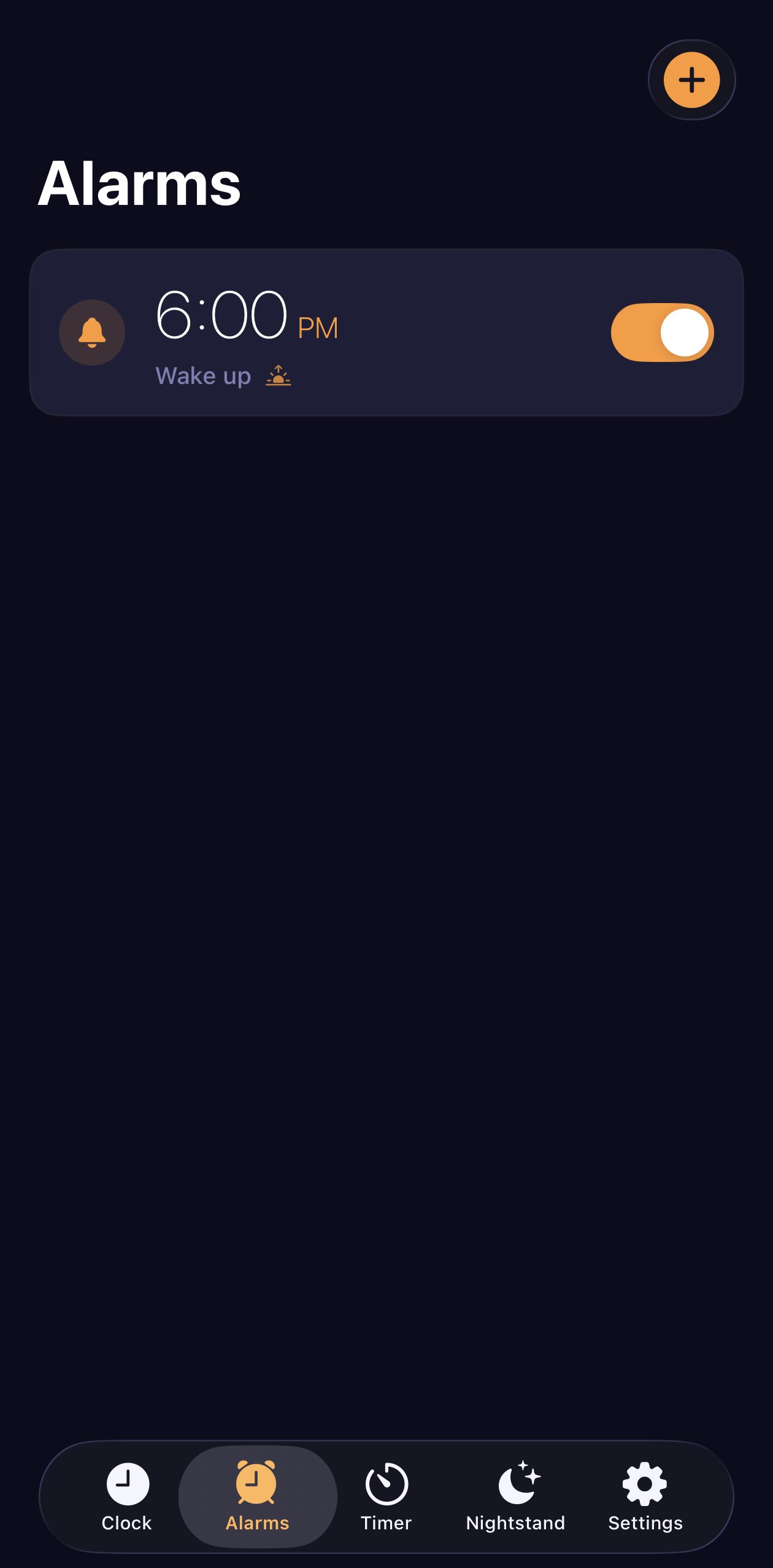
- Set it as a repeating alarm for every day. While the habit forms, the weekend alarm is the one that matters most.
- Get daylight soon after you get up. Open the curtains, step outside or eat breakfast by a window.
- Keep evenings dim. Bright light late at night pushes your clock later; here is what screens before bed do to your sleep.
- Move in small steps if you need a different schedule. Your clock shifts gradually, so moving your wake time a little at a time works better than a sudden jump.
Consistent does not have to mean early. Regularity is about keeping your times similar from day to day, and a steady schedule built around an 8:00 wake-up is just as regular as one built around 6:00.
How do you get back on track after a late night?
Life will break the schedule sometimes. The aim is to bend it back quickly without dragging your body clock along with it.
| What happened | What to do next | Why it helps |
|---|---|---|
| A late night out | Get up within about an hour of your usual time, nap briefly if you need to, and go to bed a little earlier that night | Repays some sleep without moving your clock |
| A night spent lying awake | Get up at your usual time anyway and avoid a long or late nap | Lets sleep pressure build for the next night |
| A weekend that drifted late | Hold your weekday wake time on Sunday and get outside early | Pulls your clock back before Monday |
| One unusually early start | Go to bed somewhat earlier the night before, then return to your normal times the next day | A single early morning is usually easier to absorb than a run of irregular days |
Short naps are a useful recovery tool here, as long as they stay short and fall in the early afternoon. The details are in the guide to power naps.
What if you work shifts?
Most regularity advice assumes a daytime life, and shift workers cannot always keep the same clock times. The principles still help. Keep your sleep times as steady as possible within each run of shifts, and protect a dark, quiet bedroom for daytime sleep, with blackout curtains and your phone silenced.
A common recommendation is to use light deliberately: bright light while you work, and as little as possible, sunglasses included, on the way home before sleeping. Rotating shifts are the hardest to adapt to. If you struggle with persistent insomnia, or with sleepiness at work or on the drive home, talk to a doctor; shift-related sleep problems are well recognized and can be managed.
Where to start this week
Pick one wake time you can keep all seven days and set it as a repeating alarm. Count back the sleep you need to find a bedtime, open the curtains as soon as you get up, and hold the routine through one full weekend before you judge it.
Expect the first few days to feel early, especially on Saturday. A steadier rhythm tends to get easier as your clock settles, and the payoff usually shows up as calmer Mondays rather than any single great night.
Frequently asked questions
Is a regular sleep schedule more important than getting more sleep?
You need both, and they rarely conflict. Research associates regular timing with better outcomes alongside sleep duration, not instead of it. When the two do clash, such as after a late night, getting up near your usual time and adding an earlier bedtime or a short nap usually protects your schedule better than a long sleep-in, while still repaying some sleep.
Does bedtime matter as much as wake-up time?
Both matter, but wake time is easier to control and does more to anchor your body clock, because it sets when you first see daylight. Bedtime decides how much sleep you get, yet you cannot force yourself to fall asleep. Keep your wake time fixed, go to bed when you feel sleepy within a steady window, and bedtime usually settles on its own.
How long does it take to fix a sleep schedule?
It depends on how far your schedule has drifted. The body clock moves gradually, so a shift of an hour or two usually takes days to a couple of weeks of consistent wake times and morning light, not a single night. If your sleep is still unsettled after several weeks of steady habits, it is worth talking to a doctor.
Does a consistent sleep schedule have to be an early one?
No. Regularity is about keeping your sleep and wake times similar from day to day, not about how early they are. A schedule that runs from midnight to 8:00 every day is perfectly regular. Night owls often find a steady later schedule easier to keep, if work and family allow it, than an early one they abandon every weekend.
Sources
- Windred DP, et al. Sleep regularity is a stronger predictor of mortality risk than sleep duration: a prospective cohort study. Sleep, 2024. doi.org/10.1093/sleep/zsad253
- Phillips AJK, et al. Irregular sleep/wake patterns are associated with poorer academic performance and delayed circadian and sleep/wake timing. Scientific Reports, 2017. doi.org/10.1038/s41598-017-03171-4
- Wright KP, et al. Entrainment of the human circadian clock to the natural light-dark cycle. Current Biology, 2013. doi.org/10.1016/j.cub.2013.06.039
- Wittmann M, Dinich J, Merrow M, Roenneberg T. Social jetlag: misalignment of biological and social time. Chronobiology International, 2006. doi.org/10.1080/07420520500545979
This article is for general information only and is not medical advice. WakeUp 2day is not a medical device and does not diagnose, treat or prevent any condition. If you are worried about your sleep or your health, talk to a doctor.